Wednesday, April 26, 2023

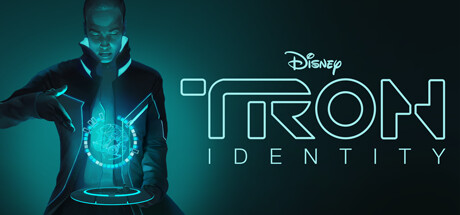
TRON: Identity

GREETINGS, PROGRAM

In a new Grid, forgotten by its creator and left alone to evolve without User intervention, an unprecedented crime has been committed. The Repository stands at the center of this society. In the aftermath of a break-in, the future of this Grid hangs in the balance.


TRON: Identity is a visual novel adventure following Query, a detective program tasked with uncovering the mystery of what was taken and by whom. Finding yourself in a world built on unstable foundations and filled with whispered knowledge, it’s up to you to question suspects and investigate your surroundings to piece together the truth.


The decisions you make will actively influence the story, with a multitude of possible outcomes, good and bad – all depending on your carefully chosen words. You’ll interact with a number of intriguing characters, and decide whether to ally with them, spurn them, or even derezz them. However you choose to deal with them, you’ll need to recover their lost memories in your search for answers, puzzling your way through defragging Identity Discs. The world of TRON is growing.


Tuesday, April 25, 2023

Dune: Awakening

 Are you bored of the typical survival games set in mundane forests or post-apocalyptic worlds? Fear not, gamers, for Funcom has a unique solution: why not try surviving on the most inhospitable planet in the universe? Enter Dune: Awakening, the ambitious Open World Survival MMO set on the dry and sandy deserts of Arrakis.

After its grand reveal at Gamescom 2022, Funcom releases pre-alpha footage showcasing the vast expanses of desert that players will spend countless hours traversing. Based on Frank Herbert’s iconic sci-fi novel and Denis Villeneuve’s blockbuster film, Dune: Awakening caters to those who have always dreamt of experiencing life on a planet where water is scarce, and sandstorms can strip the flesh from your bones.


Sunday, April 23, 2023

Extrapolations

 In the fictional world of Apple TV's Extrapolations, set 14 years into the future, the melting of ice caps and exploitation of natural resources in the Arctic, devastating forest fires, and water scarcity have become commonplace, highlighting the escalating threat of climate change as humanity's greatest existential crisis. However, few onscreen narratives address this issue, making Extrapolations a timely but flawed portrayal. The show's pilot episode is set in 2037, where present-day problems have intensified, aligning with a recent Intergovernmental Panel on Climate Change report warning of catastrophic climate change tipping points in the 2030s if we fail to take action. Despite its relevance, the show's use of technical language and jargon assumes a certain level of prior knowledge, and it fails to adequately address the potential of renewable energy to reduce our reliance on fossil fuels, despite the fact that renewable energy has surpassed coal consumption in the U.S. for the first time.


Saturday, April 22, 2023

Mrs. Davis

 At the center of the new Peacock original series, Mrs. Davis, which has received positive reviews and generated early buzz as one of the most captivating new genre shows of the year, lies a fundamental question: What lengths would you go to in order to defeat an evil artificial intelligence? While the show has many unexpected twists and turns, the basic premise is that there is a popular and potentially dangerous AI called "Mrs. Davis" that a nun named Simone (played by Betty Gilpin) is determined to shut down for the betterment of humanity. Simone believes that deactivating Mrs. Davis is the right course of action, but it's not as simple as just unplugging her. So, the question remains: how can she achieve her goal?


The Doctor in 1776

 The Doctor stepped out of the TARDIS and took a deep breath, filling his lungs with the crisp, autumn air of colonial America. He looked around, taking in the sights and sounds of Philadelphia in 1776. The city was abuzz with activity, as people rushed to and fro, preparing for the impending revolution.

The Doctor smiled to himself, knowing that he had arrived at a pivotal moment in human history. He walked through the streets, marveling at the old buildings and the quaint shops that lined the sidewalks.

As he turned a corner, he heard a commotion coming from a nearby alleyway. Curiosity getting the best of him, he ran towards the sound, his sonic screwdriver at the ready.

As he arrived at the alleyway, he saw a group of redcoats accosting a young man. The Doctor recognized the man immediately as Thomas Paine, the author of "Common Sense", one of the most influential political tracts of the era.

Without hesitation, the Doctor stepped forward and aimed his sonic screwdriver at the redcoats. "I think it's time you boys moved along," he said, his voice calm but firm.

The redcoats hesitated for a moment, then realizing that they were outnumbered, they quickly made their escape.

Thomas Paine thanked the Doctor, clearly grateful for the help. The Doctor smiled and asked Paine what he was doing in the alleyway.

"I was on my way to the printing press," Paine replied. "I'm working on a new pamphlet, one that will rally the people to the cause of independence."

The Doctor nodded, understanding the importance of Paine's work. "Well then, I think I'll stick around and see how this all plays out," he said, a mischievous twinkle in his eye.

And so, the Doctor found himself in the middle of the American Revolution, fighting alongside the likes of George Washington and Benjamin Franklin. He witnessed firsthand the birth of a new nation, and when it was all said and done, he knew that he had played a small but important role in shaping the course of human history.


Friday, April 21, 2023

Martian Hope

 In the year 2045, humanity had made significant advancements in science and technology. The world had changed, and it was a brighter, more hopeful place than it had been in decades.

In this future, people lived longer, healthier lives. They had access to clean energy and clean water, and food was plentiful. The cities were clean and safe, with well-designed buildings and efficient transportation systems. And humanity had finally colonized Mars, with a thriving community of scientists and explorers living and working on the red planet.

One of those explorers was Sarah, a brilliant young scientist who had always dreamed of going to Mars. She had been selected as part of a team of researchers tasked with studying the planet's unique geology and searching for signs of past or present life.

Sarah was an optimistic and curious person, and she loved nothing more than exploring the vast and barren landscape of Mars. She and her team had made many exciting discoveries, including evidence of underground water and signs of microbial life.

But one day, Sarah made a discovery that would change everything. She had found a strange object buried in the Martian soil, unlike anything she had ever seen before. It was a small, glowing orb, and it seemed to be emitting some kind of energy.

Sarah and her team brought the orb back to their base for further analysis. They discovered that it was a highly advanced piece of technology, far beyond anything that had been created on Earth. It had the power to create and sustain life, and it could also heal and regenerate damaged cells.

Sarah knew that this discovery could change the course of human history. With this technology, they could solve many of the world's most pressing problems, from hunger and disease to climate change and energy shortages.

She and her team worked tirelessly to learn everything they could about the orb and its capabilities. And over time, they were able to replicate its technology and create new devices that could benefit humanity in countless ways.

Thanks to Sarah's discovery, the world entered a new era of peace and prosperity. People no longer had to worry about sickness, poverty, or environmental destruction. They could explore the stars and unlock the mysteries of the universe, all while living in a world of harmony and abundance.

And as for Sarah, she continued to explore the wonders of the universe, always seeking out new discoveries and new ways to make the world a better place. She knew that there was still so much more to learn and so much more to achieve, but she was excited to be part of a world that was moving forward with optimism and hope.
Wednesday, April 19, 2023

Bubbleworld: A Megastructure of the Future

 Imagine a world where humans can live in a giant, orbiting bubble nearly half a million kilometers across. This is the concept of Bubbleworld, a proposed megastructure that could potentially revolutionize space colonization.

Bubbleworld would be a hollow, spherical structure that is held together by its own gravity, just like a planet. The structure would have a breathable atmosphere, and could potentially support a wide range of ecosystems and even human settlements.

The idea of Bubbleworld was first proposed by the physicist Gerard O'Neill in the 1970s as part of his vision for space colonization. He envisioned a world where humans could live in vast, self-sustaining habitats that would orbit the Earth and other celestial bodies.

Bubbleworld would be constructed using advanced materials and manufacturing techniques that are still being developed. The structure would have to be extremely durable, as it would need to withstand the harsh conditions of space, including radiation, micrometeoroids, and extreme temperature fluctuations.

One of the key benefits of Bubbleworld is that it could potentially provide a solution to the problem of resource scarcity on Earth. The structure would have its own self-contained ecosystems, which could potentially produce food and other resources for its inhabitants. This would make it possible for humans to live sustainably in space without relying on supplies from Earth.

Another potential benefit of Bubbleworld is that it could serve as a platform for scientific research and exploration. The structure could be used to study the effects of long-term space travel on human health, as well as to conduct experiments in fields such as biology, physics, and astronomy.

While the concept of Bubbleworld is still largely theoretical, it represents an exciting vision for the future of space exploration and colonization. With continued advances in materials science and manufacturing technology, it may be possible to make this megastructure a reality in the not-too-distant future.

In conclusion, Bubbleworld represents a bold and ambitious vision for the future of space colonization. While there are still many challenges to overcome, the potential benefits of this megastructure are enormous, and could help pave the way for a new era of human exploration and discovery in the cosmos.

Last Circle on Kesh

  The storm-lashed ruins of the ancient Sith temple on Kesh had become an open grave. Eighty-three combatants had been dropped from orbit in...